
The Karpman Drama Triangle
What it is and what it's not.

The Karpman Drama Triangle was one of those concepts that made me simultaneously think, “Wow, this explains everything” and “I would like to unsubscribe immediately.”
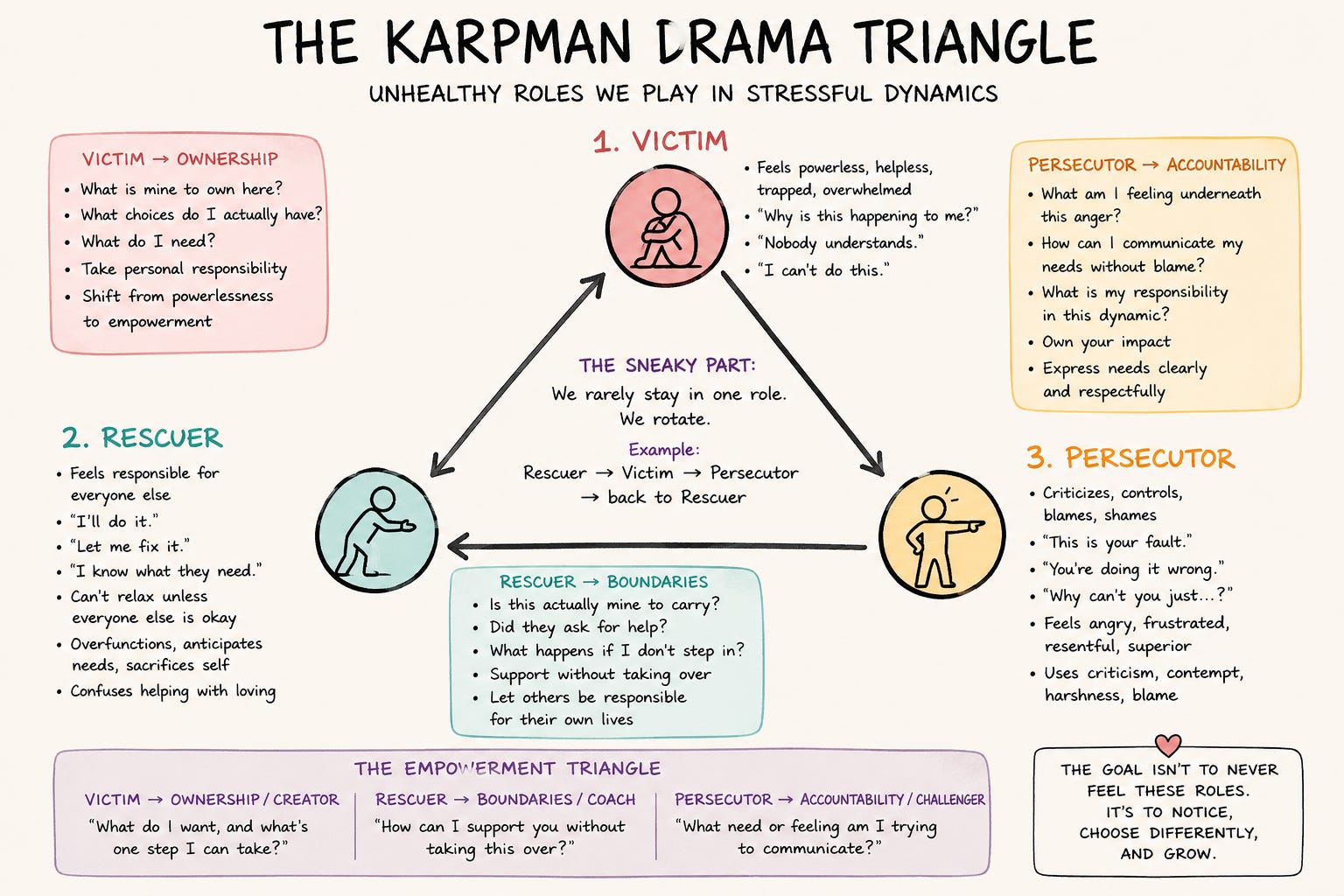
The idea is that in unhealthy relationships and conflicts, people unconsciously move between three roles:
1. The Victim
The Victim feels:
powerless
helpless
trapped
overwhelmed
“Why is this happening to me?”
“Nobody understands.”
“I can’t do this.”
Important: being in the Victim role is not the same thing as being an actual victim of abuse or trauma. It’s a mindset characterized by powerlessness.
Examples:
“No one helps me.”
“Everything falls on me.”
“I have no choice.”
The growth path out of Victim is:
➡️ Ownership
Ask:
What is mine to own here?
What choices do I actually have?
What do I need?
2. The Rescuer
The Rescuer feels responsible for everyone else.
Common thoughts:
“I’ll do it.”
“Let me fix it.”
“I know what they need.”
“I can’t relax unless everyone else is okay.”
Rescuers often:
overfunction
anticipate needs
give unsolicited advice
sacrifice themselves
confuse helping with loving
This one tends to hit a lot of moms particularly hard.
Examples:
constantly solving problems for others
preventing people from experiencing consequences
managing everyone else’s emotions
neglecting your own needs
The growth path out of Rescuer is:
➡️ Boundaries
Ask:
Is this actually mine to carry?
Did they ask for help?
What happens if I don’t step in?
A phrase from Onsite that seems relevant:
“I can’t be comfortable unless you’re comfortable.”
That’s classic rescuer energy.
3. The Persecutor
The Persecutor criticizes, controls, blames, or shames.
Common thoughts:
“This is your fault.”
“You’re doing it wrong.”
“Why can’t you just…?”
“People are incompetent.”
Persecutors often feel:
angry
frustrated
resentful
superior
self-righteous
Examples:
criticism
micromanaging
contempt
harshness
blame
The growth path out of Persecutor is:
➡️ Accountability
Ask:
What am I feeling underneath this anger?
How can I communicate my needs without blame?
What is my responsibility in this dynamic?
The sneaky part
People rarely stay in one role.
They rotate.
For example:
Mom Version
You do everything for everyone (Rescuer).
Nobody appreciates it and you’re exhausted (Victim).
You explode because no one helps (Persecutor).
You feel guilty and start overfunctioning again (Rescuer).
Sound familiar?
The Empowerment Triangle
The goal isn’t to never feel victimized, rescuing, or angry.
It’s to move toward:
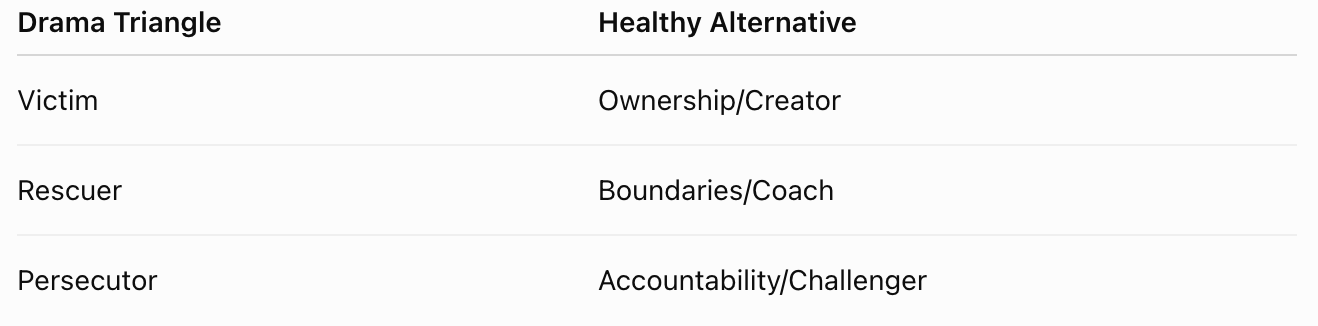
Instead of:
“Why is this happening to me?”
ask:
“What do I want, and what’s one step I can take?”
Instead of:
“Let me fix this for you.”
ask:
“How can I support you without taking this over?”
Instead of:
“You’re the problem.”
ask:
“What need or feeling am I trying to communicate?”
Sparknotes Version:
Victim → Ownership
Rescuer → Boundaries
Persecutor → Accountability
That’s really the entire assignment.